


 View Case Studies
 The B2B App Graveyard: Why Indian General Trade Chose WhatsApp Instead
The B2B App Graveyard: Why Indian General Trade Chose WhatsApp Instead
 Posted by Vishal Ranjan on April 30, 2026 •7 min read
Walk through the auction yards of Unjha, the wholesale lanes of Yesvantpur, or the bustling kirana hubs of Chandni Chowk, and you will witness the beating heart of the Indian economy. General Trade (GT) forms the unshakeable spine of retail in this country. Over 13 million kirana stores drive more than 80% of all FMCG volume. It is a highly localized, deeply relationship-driven ₹18 Lakh Crore ecosystem running on handshakes, quick mental math, and implicit trust.
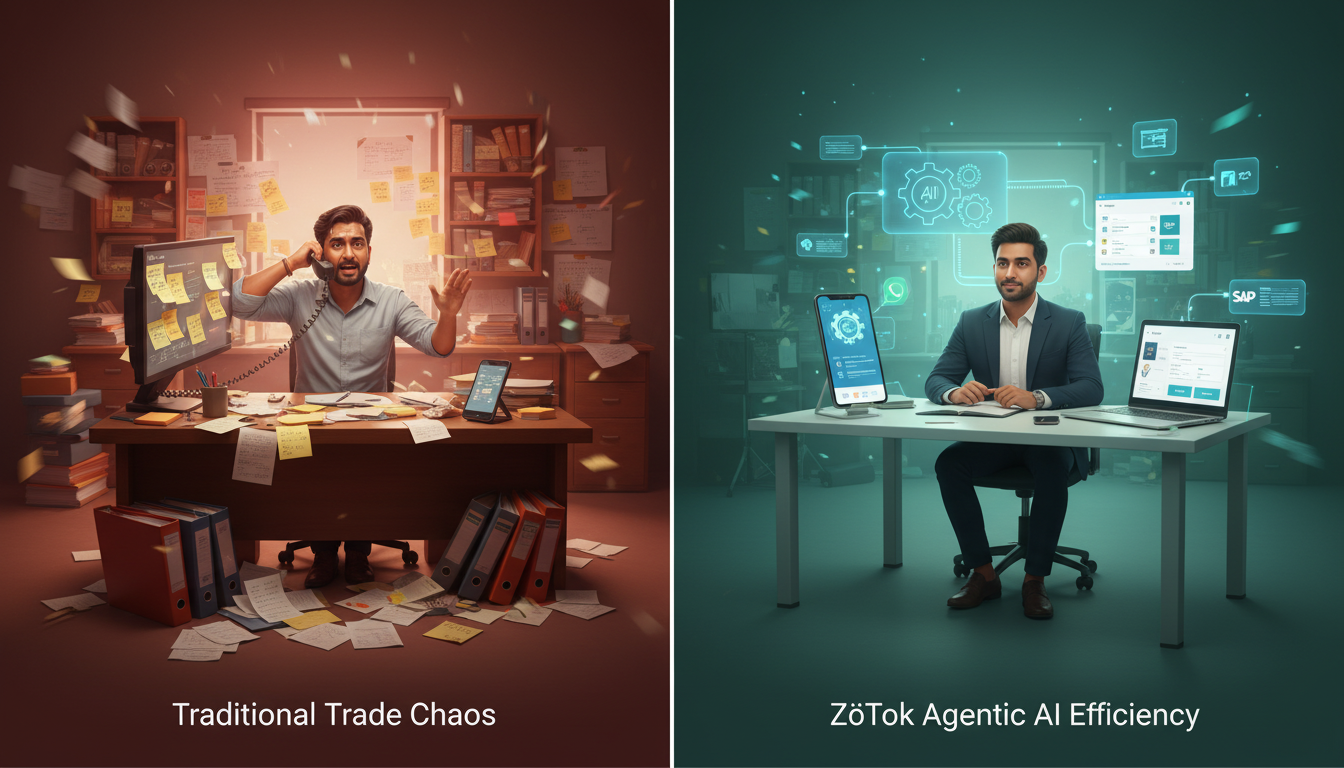
Then, the tech industry arrived, convinced that this massive, intricate network was simply "inefficient." Armed with billions in venture capital, tech giants and massive brands decided that Indian General Trade needed forced digital transformation. The Silicon Valley playbook dictated that the solution to every problem was a proprietary app. From independent B2B e-commerce aggregators burning cash to disrupt distribution, to individual brands forcing retailers onto closed portals, the industry tried to strong-arm merchants into abandoning their traditional workflows.
And the Indian merchant pushed back, hard.
The Delusion of the App-First Strategy
To understand why B2B ordering apps fail in the traditional supply chain, you have to look at the daily reality of the merchant. Why did so many heavily funded platforms face massive pushback from distributors and agonizingly low retention rates from retailers?
It boils down to a profound misunderstanding of merchant behavior:
- The Smartphone Real Estate Battle: The average kirana owner or regional dealer runs their business on a budget Android phone in the ₹10,000 to ₹15,000 range. They are already fighting for storage space between family photos and essential utilities. They simply do not have the storage—nor the desire—to download 20 different ordering apps for 20 different brand portfolios.
- The Friction of the Interface: Traditional trade is frictionless. You say what you need, the distributor notes it down, and the transaction is done. Apps introduce high-friction barriers: remembering passwords, waiting for OTPs, navigating sterile drop-down menus, and searching for SKUs. It strips away the conversational negotiation that Indian trade is built upon.
- The "Shikhar" Exception: Industry insiders love to point to HUL’s Shikhar app as proof that B2B apps work. What they ignore is that it took Hindustan Unilever’s unprecedented market dominance and an army of on-the-ground executives to manually install the app, train the shopkeepers, and financially incentivize them to use it. Mid-market brands and regional super-stockists simply cannot replicate that kind of muscle.
The WhatsApp Rebellion
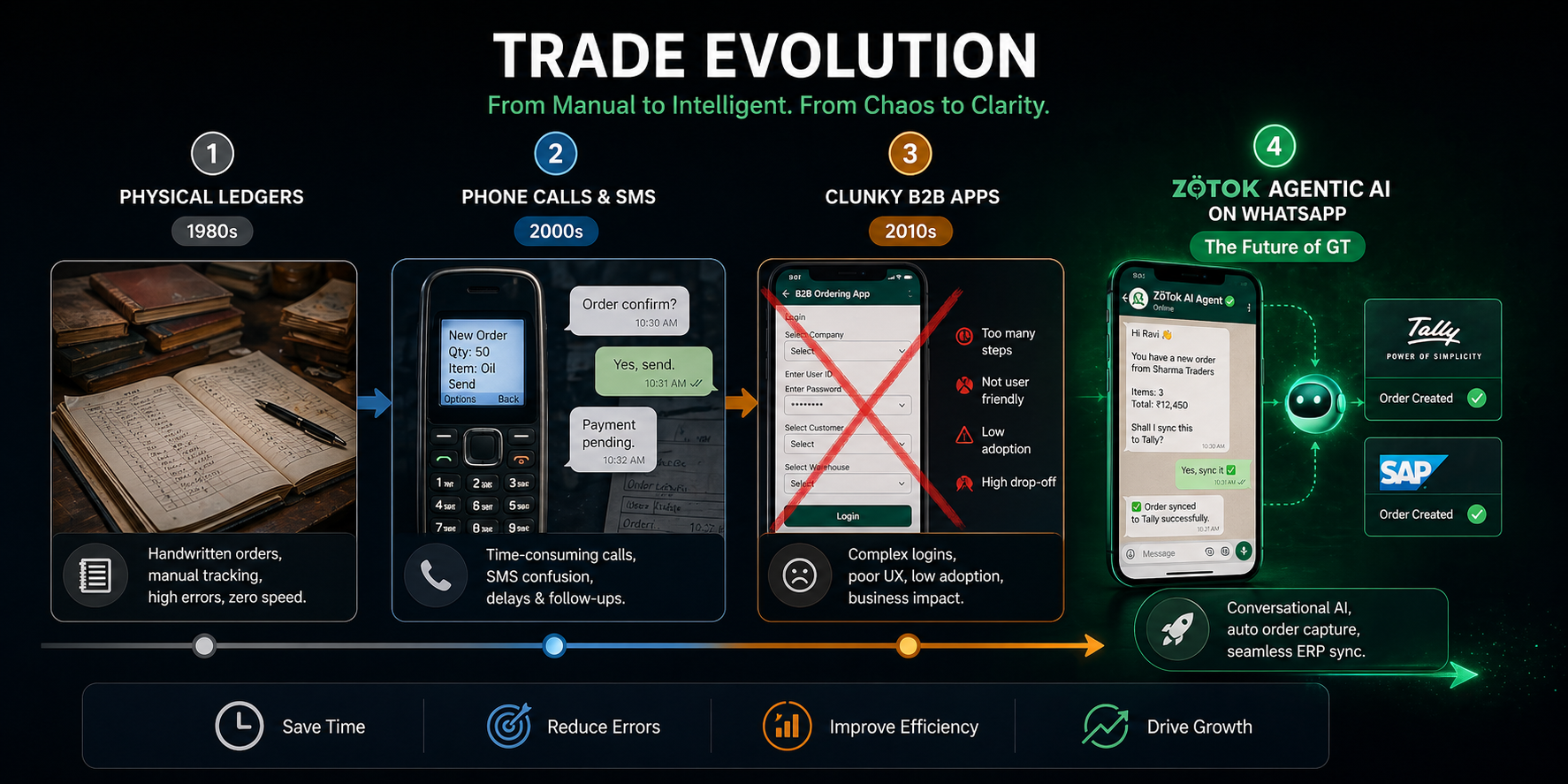
Instead of adopting the apps, the Indian supply chain rebelled. They migrated to the one platform where friction was zero, the learning curve was nonexistent, and the communication was instant: WhatsApp.
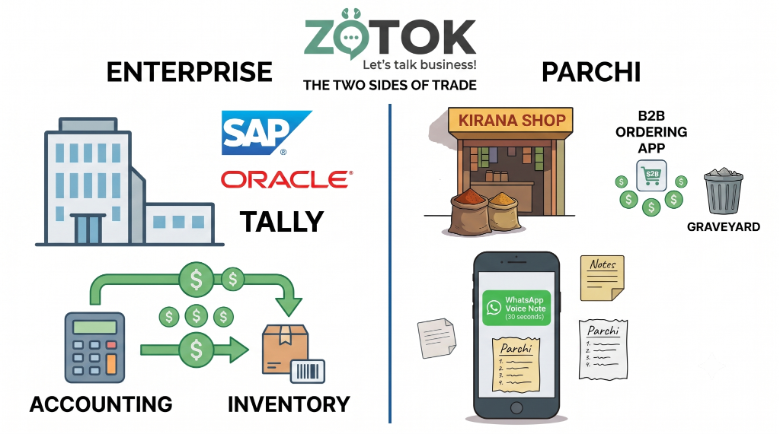
With over 500 million active users in India, WhatsApp is the country's default operating system. For the buyer, it was a massive upgrade. A retailer could just tap the microphone icon and drop a voice note: "Bhaiya, send 10 cartons of the premium tea, and apply last week's scheme." They could snap a blurry photo of a handwritten list on a piece of paper and hit send.
But while this was a massive win for the retailer, it created a devastating bottleneck for the distributor.
You traded physical chaos for digital chaos. Suddenly, your sales coordinators and back-office staff were transformed into glorified data-entry clerks. They were spending hours deciphering voice notes, zooming in on poorly lit photos, and manually typing orders into Tally or SAP.
The Lateral Shift: Agentic AI as the GTM Engine
The solution to the B2B tech problem isn't to build a better app with a prettier UI. The solution is to make WhatsApp smarter.
At ZöTok, we realized the winning Go-To-Market strategy is Conversational Commerce. Instead of forcing your buyers to change their behavior, we upgrade your backend to meet them where they are.
By layering Agentic AI over your official WhatsApp Business API, your buyers can continue to operate exactly as they do today. They can send their voice notes, type in Hindi, Marathi, or Telugu, or snap photos of their handwritten chits.
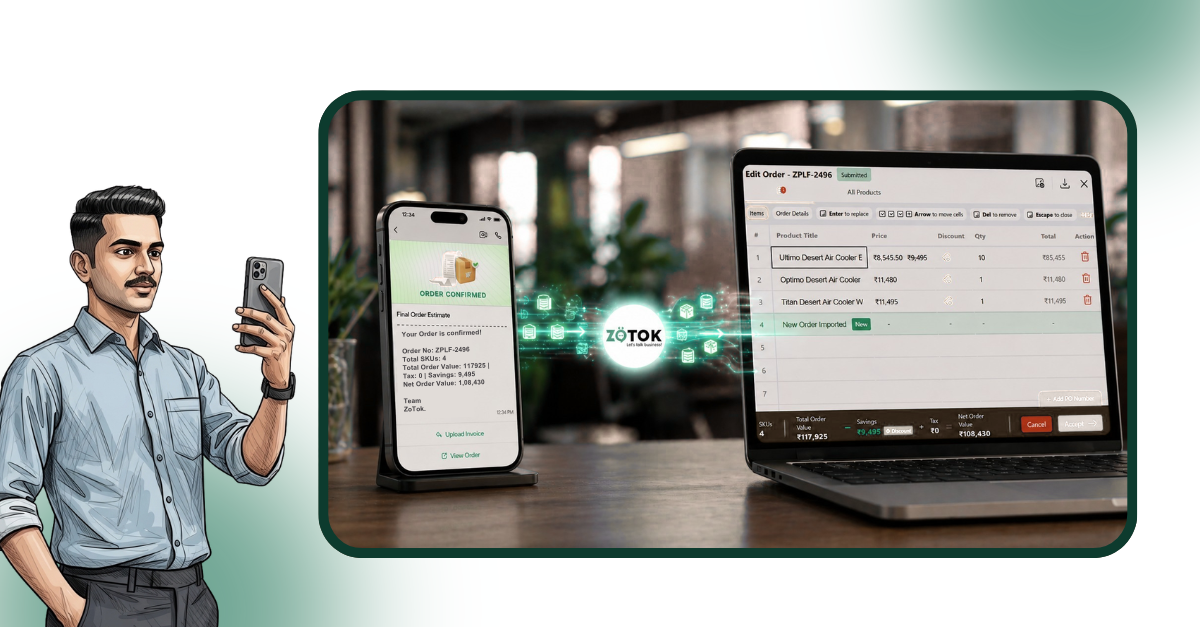
Our AI acts as your digital munim (accountant/clerk). It intercepts the message, understands the intent, identifies the exact SKUs from your catalog, structures the order, and pushes the demand directly into your ERP via API or a secure background sync.
We preserve the conversational soul of the market but scale it with the ruthless precision of AI. It’s time to stop fighting how your buyers want to trade. Digitize the conversation, not the platform.
Written by -

Blog List
 Decoding the 'Parchi' Economy: Why Basic OCR Fails Indian General Trade
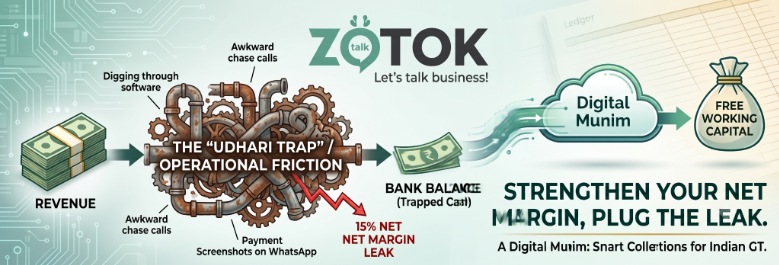 The 15% Margin Leak — Why Your Credit Cycles Are Stretching (and How to Plug It)
- The B2B App Graveyard: Why Indian General Trade Chose WhatsApp Instead
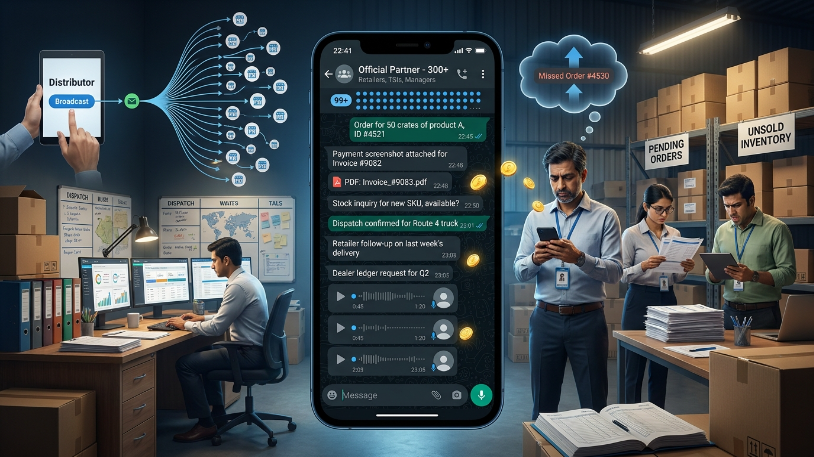 The 15% Margin Leak: How Official WhatsApp Groups Are Draining Your Cash Flow
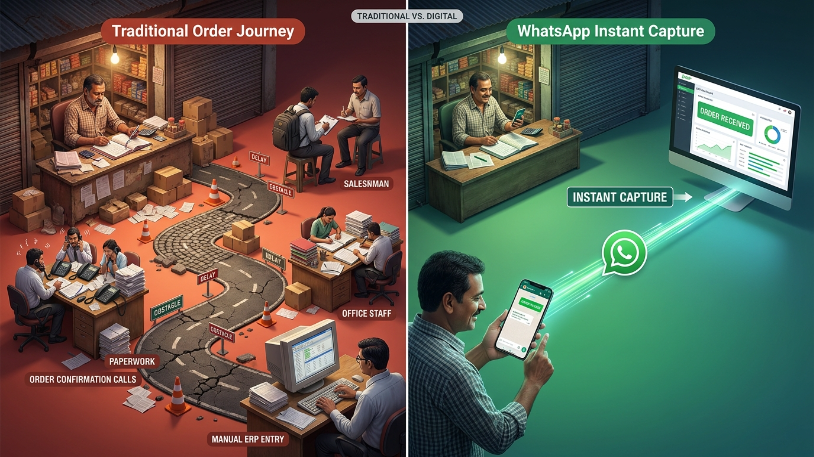 The Myth of the 9-to-5 Distributor: Bridging the Beat Gap with 24/7 Commerce
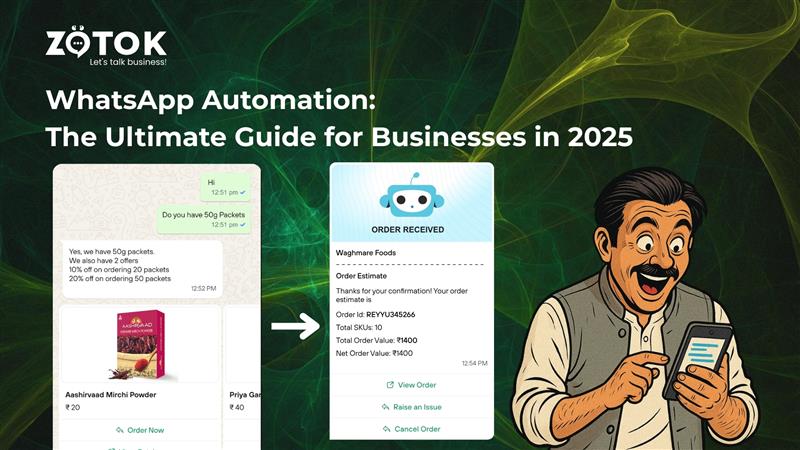 WhatsApp Automation: The Ultimate Guide for Businesses in 2025
 How to Set Up WhatsApp Business for Your Business: The Ultimate Step-by-Step Guide
 Top 10 WhatsApp Marketing Strategies for Indian Businesses: A Comprehensive Guide
 Automating Customer Service on WhatsApp with Zotok.ai's GenAI: The Ultimate Guide for Indian Businesses
 Managing High Volumes of Customer Inquiries on WhatsApp: A Comprehensive Guide for Indian Businesses
 Managing Customer Complaints on WhatsApp Effectively: A Comprehensive Guide for Indian Businesses
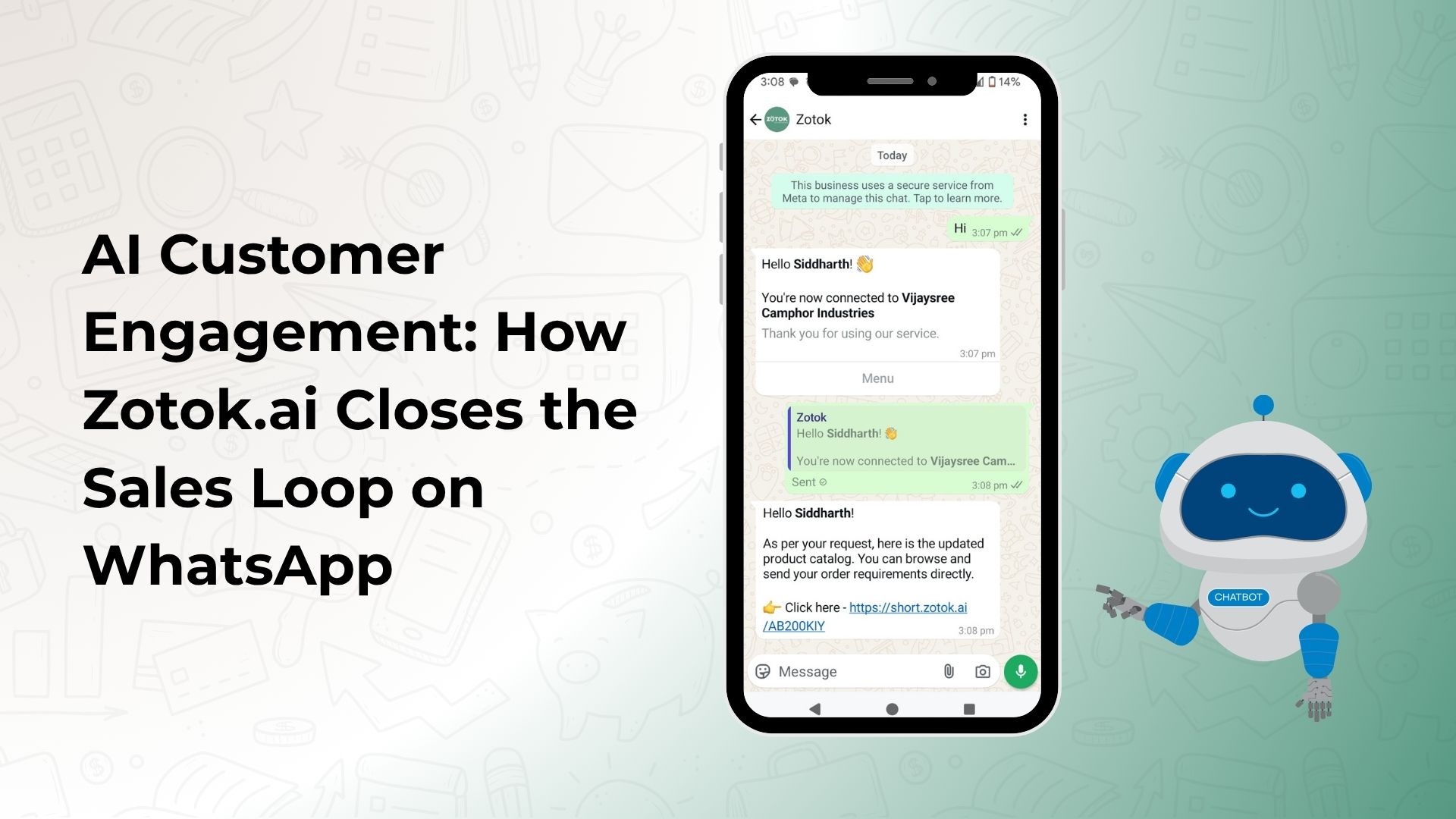 AI Customer Engagement: How Zotok.ai Closes the Sales Loop on WhatsApp
 WhatsApp Marketing
 WhatsApp Order Processing
 Distributor & Reseller Engagement on WhatsApp
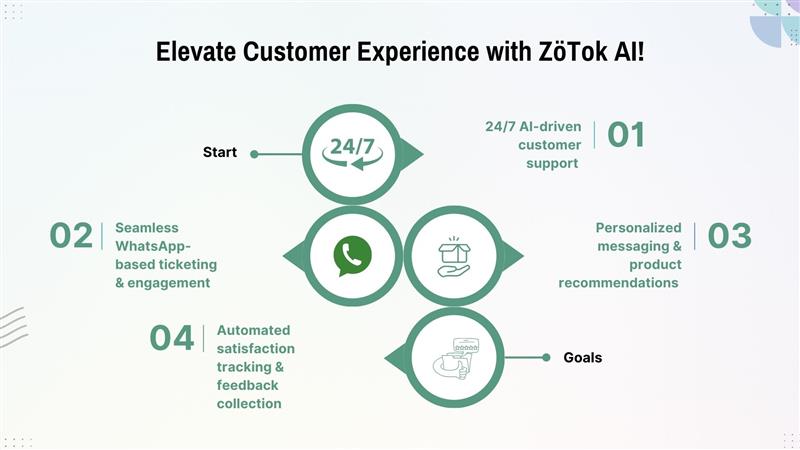 Customer Retention and Support on WhatsApp
 Catalog Sharing on WhatsApp: How ZöTok Solves the Catalogue and Image-Sending Problem for Traders and Business Owners
 Want to Grow Your Business? Use WhatsApp API
 GenAI in General Trade: Transforming India's Distribution Landscape
 Overcoming Distribution Challenges in India with WhatsApp Solutions
 Distributor Management with ZöTok: WhatsApp Commerce and Generative AI Solutions for Smarter Supply Chains
 WhatsApp Business for Brand/Business Owners: Why ZöTok's WABA is the Smarter Choice
 ZöTok: India's First Network CRM Platform Utilizing GenAI on WhatsApp
